

Beyond the Questions: The Dholera Forest Estate Due‑Diligence Compendium Part-2
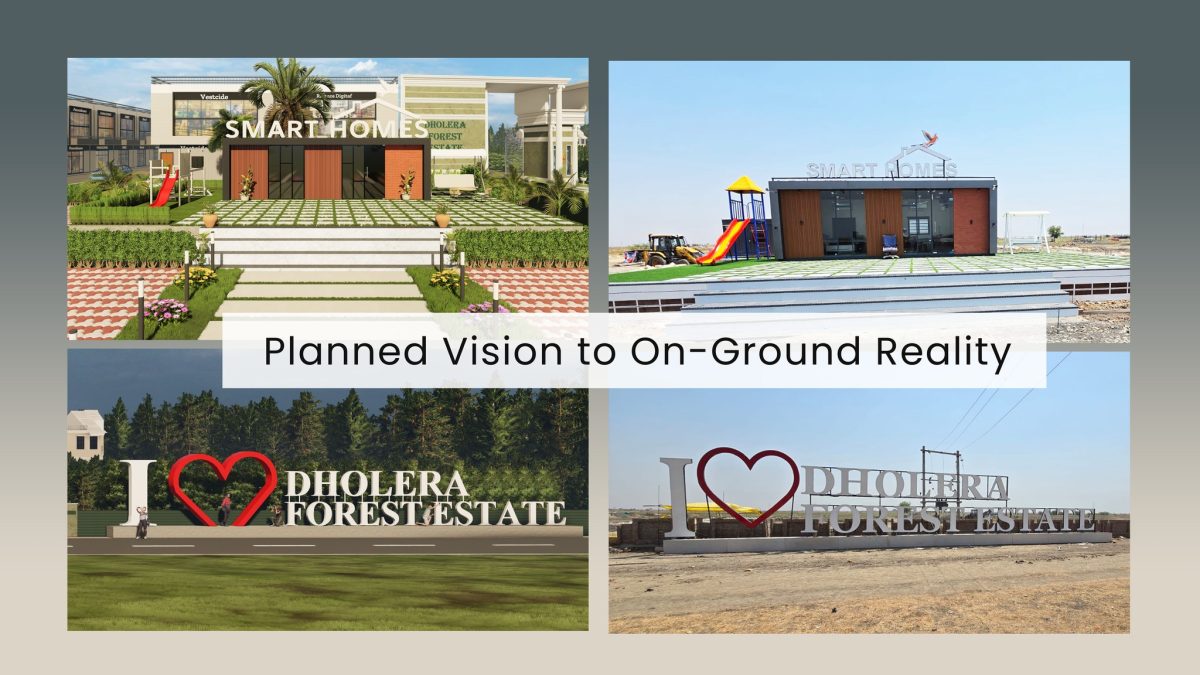
Chapter 3: “Forest Estate” — Branding vs Reality
Is “Forest” a marketing term or a legal classification?
“Forest” is a conceptual identity, not a notified forest zone. Dholera is naturally sparse in greenery, and SmartHomes Infrastructure has consciously chosen to reverse this by design, through a structured green plan involving over 40,000 trees, internal nurseries, dedicated plantation teams, and partnerships with government and non-government bodies. The outcome is not cosmetic landscaping, but a deliberately engineered, long-term green ecosystem integrated into the project’s planning philosophy.
Could future environmental norms reduce permissions?
No. All permissions have been secured before development and construction follows applicable regulations. The project’s name does not create regulatory exposure.
Who maintains green zones long‑term?
In Dholera Forest Estate, green zones, tree plantations, and ongoing nurturing are managed through professionally appointed agencies with expertise in landscape development and long-term horticulture management. The project is supported by tie-ups with dedicated nurseries for quality saplings, along with structured maintenance protocols to ensure healthy growth and sustainability over time. This approach ensures that greenery is not only created but consistently maintained as a living ecosystem, rather than a one-time plantation effort.
Chapter 4: Infrastructure on Ground
What infrastructure exists today?
What infrastructure exists today is not theoretical; it is already functional and execution-ready. The site benefits from existing black-top road frontage with direct connectivity to key regional corridors including State Highway 40, State Highway 6, State Highway 1 and NE-751, ensuring multi-directional access across the Dholera region. Its strategic proximity to the Dholera–Dhandhuka road and the ABCD Building further strengthens last-mile and administrative connectivity. Essential urban utilities have also been planned in alignment with regional infrastructure, including the water supply through Gujarat Water Supply and Sewerage Board.
From an engineering standpoint, all critical pre-development inputs, soil testing, contour and topographic surveys and detailed MEP drawings, have already been executed with institutional rigor, enabling immediate and scalable development without execution uncertainty.
What if airport operations are delayed?
This question was relevant 1–2 years ago; today, it has largely moved beyond the realm of speculation and into execution reality. The Dholera International Airport is no longer a conceptual announcement, it is an actively progressing infrastructure project, being developed and operated by Dholera International Airport Company Limited (DIACL). On-ground work has advanced significantly, and cargo operations are expected to commence within the next year, much earlier than full-scale passenger traffic.
The sequencing itself is intentional and strategic. Dholera Airport has been planned first and foremost as a cargo-led industrial airport, designed to serve anchor industries such as Tata Electronics’ semiconductor fabrication plant, upcoming electronics manufacturing clusters, and the Lothal National Maritime Heritage Complex. Semiconductor fabrication, electronics exports, and precision manufacturing are inherently cargo-intensive industries, and this demand alone justifies early airport operations independent of passenger volumes. In fact, for semiconductor ecosystems globally, cargo connectivity precedes passenger traffic, not the other way around.
Even in a hypothetical scenario where passenger operations are phased or staggered, the economic impact remains intact. Cargo operations trigger employment, logistics parks, warehousing, customs, freight-forwarding, and allied services—creating immediate demand for housing, hospitality, and social infrastructure. According to industry benchmarks, every million tonnes of air cargo generates 3,000–4,000 direct and indirect jobs, which further strengthens real estate absorption in the region.
More importantly, Dholera’s growth thesis does not hinge on a single infrastructure node. The airport is one of several anchors operating in parallel, alongside the Ahmedabad–Dholera Expressway, State Highways connectivity, Tata Semiconductor, Lothal, and the broader Gujarat industrial and logistics push. This is a distributed, multi-engine growth model, not a single-point dependency.
In short, even if one looks at this conservatively, the airport is not delayed, it is progressing in phases, with cargo operations leading the way. The question of “what if” has already been overtaken by what is happening now.
Access road width and ownership?
The project enjoys direct access from a 100-feet wide government-owned main road, ensuring long-term security of approach, uninterrupted connectivity, and zero dependency on private land or temporary right-of-way arrangements. This primary access road seamlessly connects the site to key regional arteries, providing smooth ingress and egress for residents, vehicles, and future commercial activity.
Within the township, a well-planned hierarchy of internal RCC roads has been designed to institutional standards, comprising 40-feet, 30-feet, and 24-feet wide internal streets. These roads are engineered to support long-term usage, utilities integration, and future traffic growth. The internal circulation is further enhanced through landscaped avenues, organized tree plantation, and modern street lighting, creating both functional efficiency and a high-quality urban environment. This combination of government-owned external access and robust internal infrastructure ensures durability, accessibility, and value sustainability over the long term.
Water sources?
Water supply is planned through a multi-source model, identical to Ahmedabad’s established framework. This includes Narmada canal water for bulk supply, GWSSB-managed drinking water connections, and regulated borewells as a supplementary source. The diversified approach ensures reliability, sustainability, and continuity of supply as the city and project scale over time.