

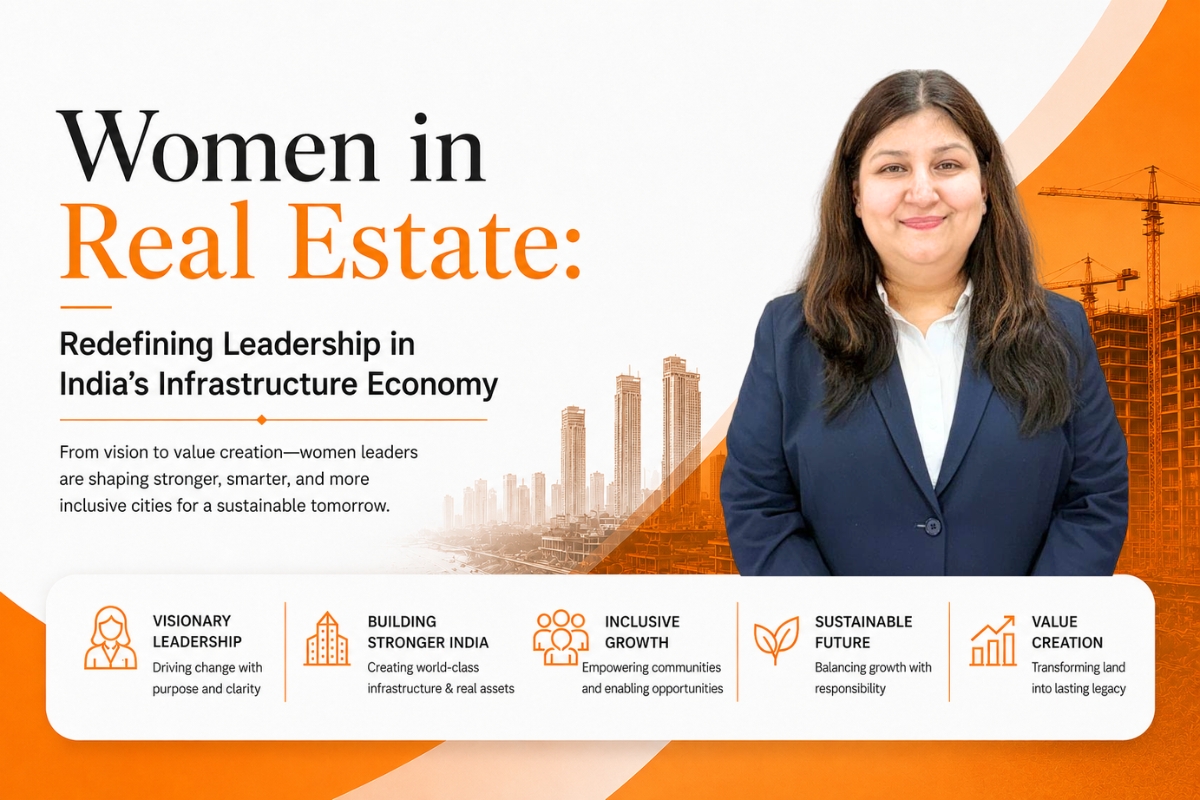
Women in Real Estate: Redefining Leadership in India’s Infrastructure Economy
Introduction
For decades, India’s real estate and infrastructure sector operated within a tightly defined framework — one shaped by legacy networks, conventional decision-making structures, and predominantly male-led leadership.
From land acquisition to large-scale capital deployment, the industry followed a predictable pattern.
That pattern is now being disrupted.
A new wave of leadership is emerging — one that is not only more diverse, but more aligned with the evolving demands of modern infrastructure. At the center of this shift is the growing influence of women who are not just participating in the sector, but actively redefining how it operates, grows, and builds long-term value.
This is no longer a symbolic change.
It is a structural transformation.
The Rise of Strategic Leadership
India’s infrastructure landscape today is fundamentally different from what it was a decade ago.
The sector is no longer driven solely by land deals and construction cycles. It now operates at the intersection of policy, capital markets, urban planning, sustainability, and long-term economic vision.
This evolution has created space for a different kind of leadership.
Across the country, women professionals are stepping into roles that demand:
- Strategic thinking over transactional execution
- Long-term vision over short-term gains
- Investor trust over aggressive sales narratives
- Ecosystem development over isolated projects
They are leading investment conversations, shaping township strategies, influencing expansion decisions, and contributing to high-value infrastructure ecosystems.
This shift reflects a deeper industry reality:
The future of real estate belongs to those who can think beyond land — and into systems.
Smart Cities and the New Infrastructure Narrative
India’s next growth cycle is being defined by large-scale infrastructure ambitions — smart cities, industrial corridors, logistics networks, and integrated urban ecosystems.
Projects like Dholera are not just developments.
They are economic blueprints.
They represent a larger national vision around manufacturing, technology, connectivity, and future-ready urbanization. Such ecosystems require leadership that understands complexity — not just execution.
This includes:
- Policy alignment and regulatory awareness
- Infrastructure lifecycle planning
- Capital flow dynamics
- Investor psychology and confidence-building
- Long-term urban sustainability
Professionals like Meenakshi Khurana are part of this evolving narrative — contributing to how emerging infrastructure ecosystems are positioned, communicated, and trusted by investors.
Through her work within Gujarat’s smart city landscape and association with SmartHomes Infrastructure, she reflects a new-age leadership approach — one that prioritizes clarity, credibility, and long-term value creation over short-term positioning.
From Real Estate to Intelligent Ecosystems
The definition of real estate itself is undergoing a transformation.
Premium developments are no longer evaluated only by location or scale. Today’s investors and buyers are assessing:
- Infrastructure readiness
- Future connectivity
- Integrated lifestyle ecosystems
- Sustainability frameworks
- Long-term appreciation potential
Luxury is no longer about excess.
It is about intelligence.
Developers are shifting from standalone projects to fully integrated environments — combining residential, commercial, industrial, and lifestyle components into cohesive ecosystems.
This transition demands leaders who can bridge business strategy with evolving consumer expectations — a space where many women leaders are naturally excelling.
Breaking the Legacy Mindset
One of the most persistent myths about real estate has been the belief that success in the sector is driven purely by aggressive negotiation and traditional deal-making.
That model is becoming obsolete.
Today’s infrastructure economy rewards:
- Transparency over opacity
- Trust over pressure tactics
- Strategic relationships over transactional interactions
- Market intelligence over speculation
- Long-term planning over quick flips
Investors are more informed.
Markets are more structured.
And credibility has become a core currency.
Women leaders across the industry are proving exceptionally effective in navigating this shift — bringing a balanced approach that integrates communication, trust-building, and strategic clarity.
The Economic Shift Behind the Change
This transformation is not happening in isolation.
It reflects a broader macro shift within India’s economy, where:
- Women-led entrepreneurship is rising
- Financial independence is increasing
- Leadership roles are becoming more inclusive
- Decision-making structures are evolving
As capital flows into infrastructure, smart cities, and industrial expansion, the industry is naturally gravitating toward leadership that can handle complexity, scale, and long-term value creation.
The Future of Infrastructure Leadership
India is entering a decade of unprecedented infrastructure growth.
With continued investments in:
- Smart cities
- Industrial corridors
- Logistics and connectivity
- High-value residential ecosystems
…the sector will increasingly favor leaders who can combine vision, execution, and credibility.
The future will not be shaped by outdated perceptions of who leads the industry.
It will be shaped by those who understand:
- Systems, not just assets
- Value, not just pricing
- Growth, not just sales
- Trust, not just transactions
And in this new equation, women are not just participating —
they are helping define the direction of India’s infrastructure future.
Meenakshi Khurana Honored as Dynamic Women Entrepreneur & Real Estate Panelist at Times Inspiring Women 2024–25